

JOIN the conversation as Tim Walker and Maria Buchanan are interviewed by Larry Ely about one of the 9 Markers topics: Evaluation. Tim is the Student Director and serves together with Maria who is the High School Coordinator at a large growing church in Kansas.
1.The Value and Purpose of Evaluation
Question: Why is evaluation valuable to our youth ministries?
Tim:
We are always trying to get better at retreats, summer camp, and weekly programs. We want to hear from the students about what is going well and what is not. It’s valuable to listen and take what we hear, apply it, and implement changes.
Maria:
I think it helps us meet the students where they are at. We have new students every year and students are changing every year. In order to meet their needs, we evaluate what is going well and what is not going well in order to improve.
Conversation Summary:
Ongoing evaluation is essential for meeting students’ needs. Evaluation is not just for its own sake but is intended to drive real changes in our ministries. It helps us improve our programming and make things better. Listening to feedback from leaders, students, and parents is crucial. The goal is to implement changes based on the input we get in order to continually improve our ministries’ effectiveness.
2.Methods and Tools for Evaluation
Question: How can we use evaluation to improve our ministries? Got any tips or tools for us?
Conversation Summary:
Our ministry uses a variety of evaluation methods, including:
Anonymous Surveys: for something like camp we might do a broad anonymous survey of students (with grade & gender) and ask things like: How was camp? How would you rate the sessions, activities, and food? We include both quantitative rankings and open-ended feedback.
In-depth Discussions: We have student ministry deacons (adult volunteers and parents), and we went through everything with them this past year. We asked our leadership team things like: Is this something we want to keep doing? Is there something we want to tweak, change, or stop?
Group Debriefs: Sometimes we verbally debrief as a group after major events. Other times, we meet with our leaders over lunch, and we ask things like: How are things going? How can we serve you better?
Structured Evaluation Tools: For deeper evaluation we use a spreadsheet tool from Download Youth Ministry. It helps assess whether events align with our ministry values and goals. The DYM tool walks you through outreach, worship, traditions, seasons, events, programs, and their purpose.
One-on-one Feedback: Regular informal feedback is also gathered through everyday conversations. Some great changes have come through just talking with people one-on-one.
Maria:
I think anonymity is when we get the best feedback and students are more open. Also, when the leaders give feedback, we lean into that because our ministry wouldn’t exist without them.
BONUS: RESOURCE
Here's a simple EVALUATION TOOL to use with your student leaders and volunteers after your next event.
(Adapted from www.amplifyministries.org)
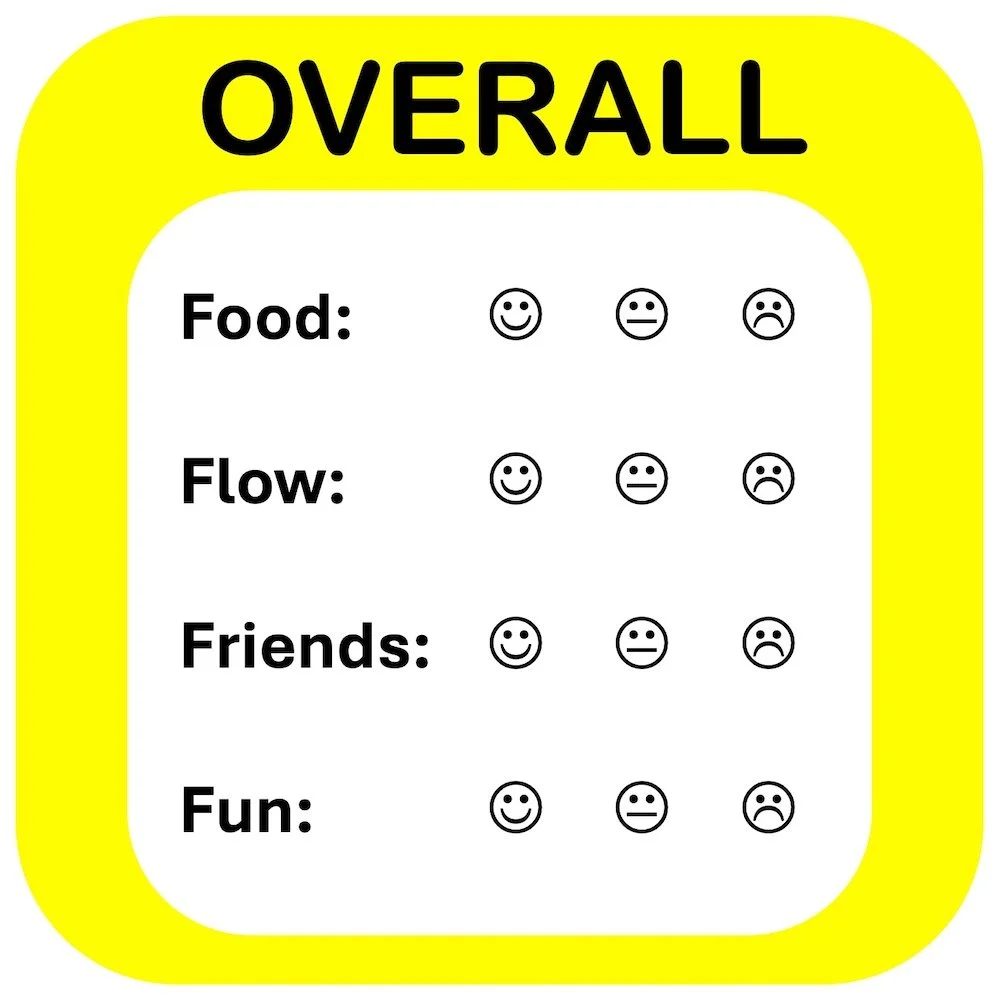
OVERVIEW
HOW DID THE EVENT GO OVERALL?

ORGANIZATION
WAS THE EVENT WELL PLANNED AND ORGANIZED?

OUTCOME
DID THE EVENT ACCOMPLISH YOUR GOALS?
3.Making Changes and Implementing Feedback
Question: How & when do you evaluate your events, activities, & programs? Got any examples for us?
Maria:
It’s kind of ongoing. Our big evaluations are usually after an event happens, and we get input from leaders and students. Our students don’t have a problem talking about how things went. Based on one of our evaluation tools, we ended up getting rid of one of our events.
PRO TIP: It helps if we have a process and a system for evaluating things, and if it’s organized.
Tim:
Evaluation can help identify if something has become a ‘Sacred Cow’ (we do it because it’s always been done). This can be helpful to consider, especially if the event pre-dated you before you arrived. There were a couple things that we killed after 2 years of being here.
PRO TIP: It helps to ask the questions: Why are we doing this? What’s the purpose?
CASE STUDY #1:
Two summers ago, we did a camp and had them evaluate the late night activity: Guys Night & Girls Night. We found out it was not a good event. Students didn’t like it. We didn’t do it again.
CASE STUDY #2:
We have a Summer Kickoff with a big pool party, and it’s open to all families. The idea was to connect with people, but it wasn’t really aligning with our goals of being available to the world and intentional at home. The feedback we got was that the event was just ‘okay,’ but we didn’t really need it— so we dropped it.
CASE STUDY #3:
Eight years ago we did an evaluation of our small group leaders. I don’t normally do this, but we asked students how they were doing. At the time, I was intentional and needed to deal with some questionable things that had happened. This evaluation allowed us to have some hard conversations.
Conversation Summary:
Feedback from evaluations has led to concrete changes in our ministry programming. We make changes, adjustments, or discontinue activities based on input from our students and leaders. It is important to us that our programming choices align with our ministry values and accomplish their intended goals. However, we are willing to adapt things based on students’ needs and honest input.
4.Impact on Volunteer Retention and Engagement
Question: How have you improved or shifted your youth ministry based on input you got from students or leaders recently?
Maria:
After Tim had a conversation with a Middle School leader, we changed how we did MS small groups. We changed the large group game and did it in the small group instead. This shift allowed them to bond together and led to deeper and better conversations.
Tim:
We changed our Junior/Senior retreat and decided to split it and do one retreat for each. It started because we split the sessions and it went better. So we created two retreats with a more specific purpose.
PRO TIP: We often underestimate the value of listening.
CASE STUDY #1:
Because of my lunch with one of my leaders, we made some changes. He was going to step away from serving, but he changed his mind. He saw that we wanted to make things better and decided to stay.
CASE STUDY #2:
On our Safety Team, one of the team members was very frustrated with things. We met with this person last Thursday. During the first part of our meeting we evaluated and talked about what we needed to change. We looked at the future and addressed some concerns. At the end of that meeting, his heart definitely changed.
PRO TIP: When leaders see us make changes and listen to their concerns it communicates that we care.
Conversation Summary:
Evaluation and responsive changes have had a direct impact on volunteer satisfaction and retention. When we listen to volunteer concerns and make adjustments it shows that we value them and that we want to improve the ministry. These case studies highlight the importance of making volunteers feel heard and supported through the evaluation process.
5.Risks of Not Evaluating
Key Question: What's the danger of not evaluating our events & programs from time to time?
Tim:
I think complacency happens. I think if I had never evaluated our ministry that I would be fine doing the same things. Doing things that we did 25 years ago would not work now. If you don’t evaluate things, you can be okay with “ok” and not get any better.
Maria:
I think we can level-off, but things can always be improved if we just ask people. People don’t always give feedback, if they are not asked. Giving them space and a place to share and give feedback can help us improve.
Tim:
I think you have to come at it with a humble heart and take that criticism. It’s not just about the good things we are doing. Through the criticism we can get better. You can't take it too personally.
Conversation Summary:
Failing to evaluate leads to complacency, stagnation, and missed opportunities. Without regular assessment, ministries risk continuing outdated practices that no longer serve current needs. Evaluation is essential for growth, both for the ministry and for individual leaders. Constructive criticism, though sometimes difficult to hear, is a key driver for improvement. The right attitude—humility and openness—is necessary for both giving and receiving feedback effectively.

Check Out the Related PODCAST!
EPISODE #85: EVALUATION
EPISODE #46: HOW TO EVALUATE YOUR MINISTRY w/ JASON

TIM WALKER: Certified LEAD222 Coach

MARIA BUCHANAN: LEAD222 Member
Interview: with Tim Walker & Maria Buchanan by Larry Ely • Posted: May 2026



















Hey Lead222 Community! We have some great speakers & videos lined up for our Summer Training. We asked our STAFF to PICK some of their FAVORITE teachers, trainers, and thought leaders to help enhance your youth ministry and your leadership. Check it out…